I have to confess my reasons to collect Gibson are a little childish. I simply like the tiller steer. There are other models that have tillers, but I like the Gibson style best.
After encountering a Gibson A at AJ’s Garden Tractor Jamboree a few years ago, I was hooked. Steve Farmer wasn’t along that year, so I recapped and debriefed the trip with him. I made the offhand remark “I’m going to own a Gibson some day”
When I say anything to Steve, I need to remember to be careful what I wish for. Not much time passed before he steered me to one for sale. Long story short, I traveled to Spencer, OH, and made a purchase and new friend. Bob Julio, I was the owner of a Gibson model D.

Whenever I own a brand, I’ll get obsessed with learning history. I haven’t delved in as deeply to Gibson yet. Recently, Steve, who assists in research, commented that he has done more digging than I have. He would be correct. I’m still enthralled learning Shaw Manufacturing and haven’t become a student to Gibson history.
Like Shaw tractors, I wasn’t content to own only one. My mistake is telling Steve. He’s good at finding them. He directed me to the Aumann Fall Harvest Sale. One of the lots was a Gibson model A. I could tell this one was special during my procurement of the winning bid.
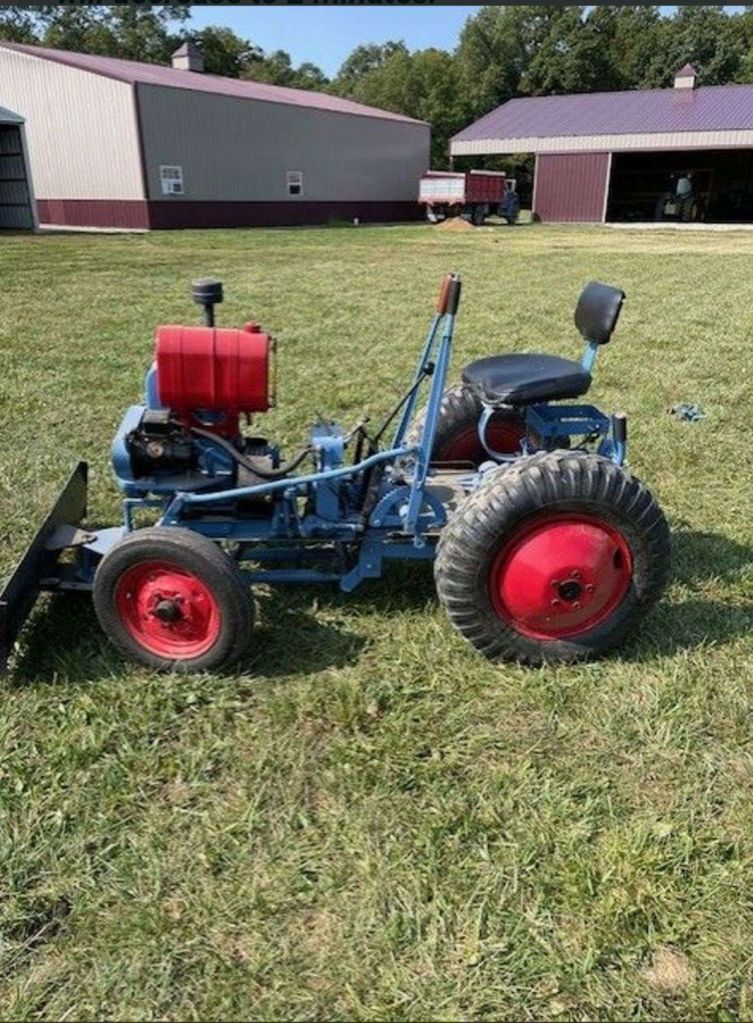
I’ll give an abridged quick biography of Gibson that is relevant to this story. Gibson tractors were built in Seattle, WA, and Longmont CO. The models A and D were a basic small tractor powered by Wisconsin engines. There are differences I’ve yet to learn. The A and D were very basic. Electric starts would have been a luxury in the forties. There is a registry accounting for the tractors that still exist. Gibson stamped serial numbers on frames to designate type and which factory the tractor was built. D models have a D prefix, and A models begin with L. Bare with me. This information becomes relevant.
This model A has an electric start! That’s pretty unusual. Is it a factory spec? Nope! That was added during the restoration. The work was so well done that it looks factory….at least to me.
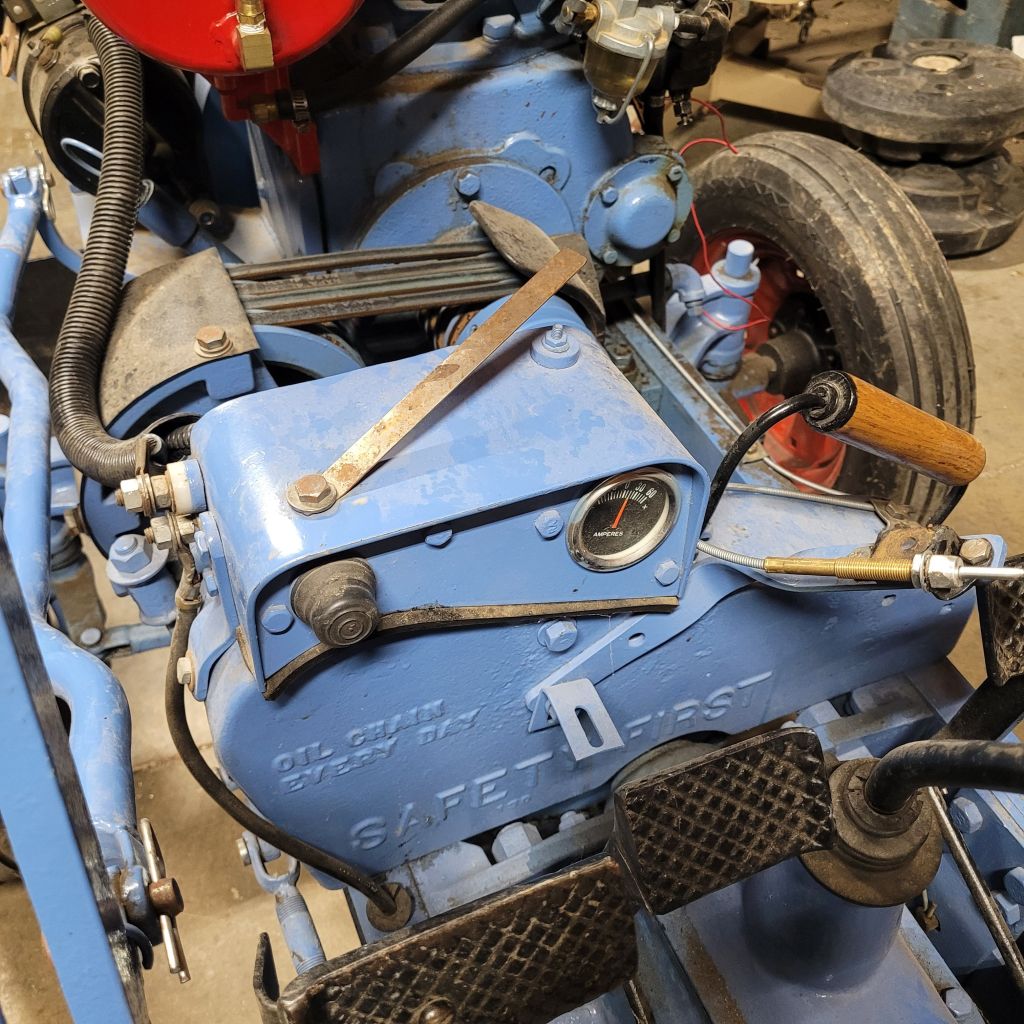
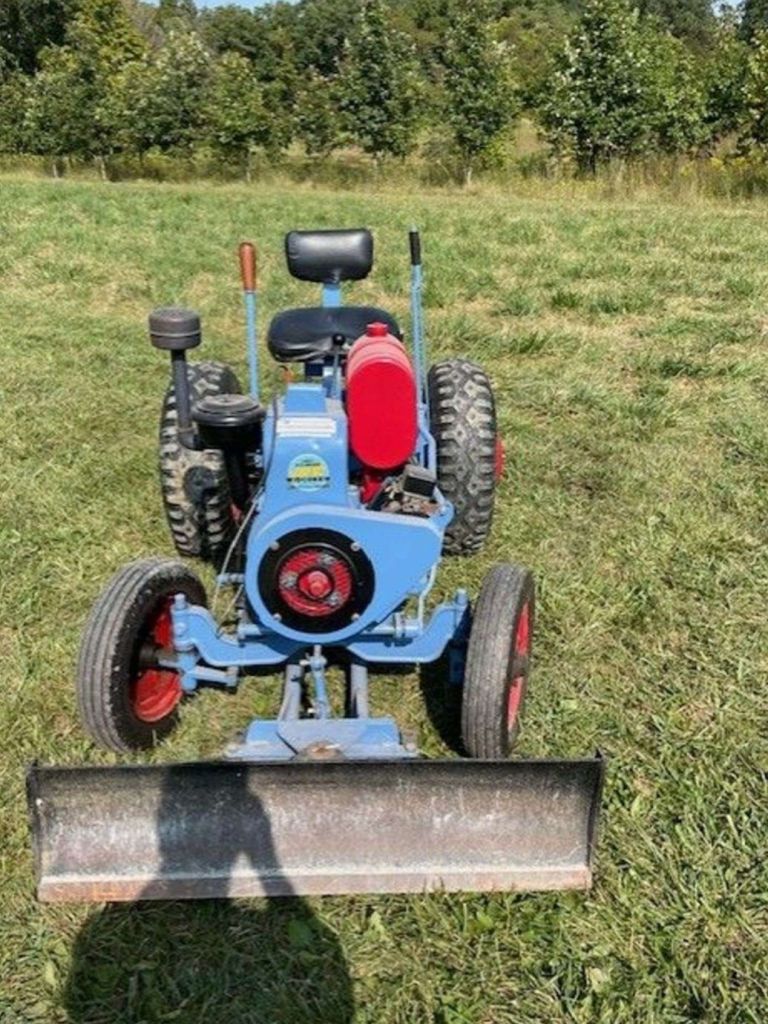
The story about the restoration is inspiring. On closer inspection, it’s noted that the tractor could be handicap accessible. The operator’s platform is wider, and a grab handle was added.
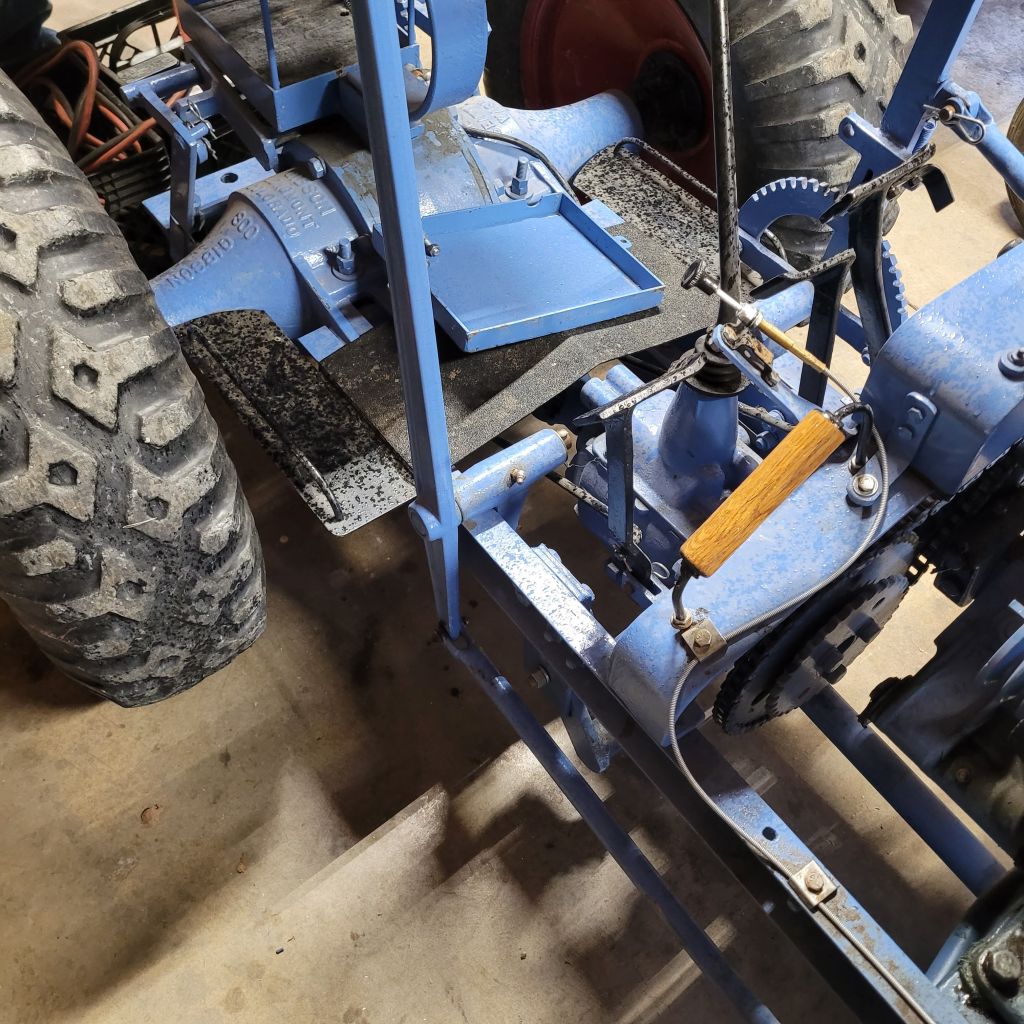
The reason for that is the inspirational part. Roy “Pete” James was paralyzed from the waist. Not only did he do the restoration, but he could also operate the tractor. He had special hand levers to work the foot pedals.
After Pete’s accident, he needed something to occupy his time. According to son Kirk, Pete was making knives. A friend that collected Gibson created a new interest with a proposition.
Two model As came to the shop. In the agreement, Pete would build a good tractor for his friend, and he could keep the leftover parts. Kirk shared this agreement worked well, and they repeated the deal again. The collector friend ended up with a model A and D. Pete had enough spare parts to build an A and D for himself.
In all, Pete’s collection included an A, D, and E. His daughter owned the A while living in Colorado. It’s ironic that the tractor was back in its state of origin for a time.
The D and E are still in the James family. Kirk has the E, and Pete’s grandson has the D.
The A is an imposter!
The tractor is in the Gibson registry #L2411. This number identifies it as a 1946 manufactured in Longmont. The tractor has a “brass tag” identification. Here’s the problem! Gibson never used a brass tag on those models. They stamped the frame rail. I found the stamp. It wasn’t hidden! It’s right in front of the brass tag.
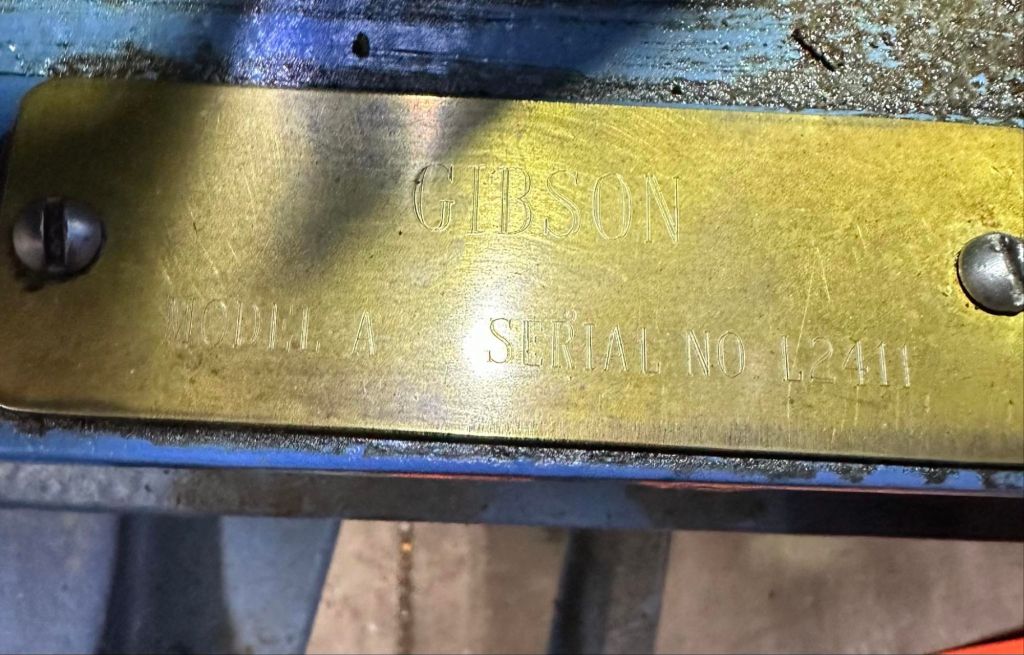

The stamp has a D prefix, or is it an L with a scratch? The numbers following are slightly illegible, but with deductive reasoning, it might indicate a 1946 model D. I’m not sure how Pete determined the 2411. Kirk and I discussed the possibility, but there isn’t any family signifance. Pete used leftover parts. Could that be why? What I do know, the brass tag was Pete’s doing.
Should the registry be corrected? That’s difficult until I actually determine the stamped ID. I’ll gladly share any information if that’s the needed outcome to update the registry.
Am I upset that I’ve been duped into believing I bought an A? Absolutely not! It’s still a Gibson. I don’t know of many with electric start and handicap accessible. I’m not the only one fooled. The tractor has been registered for a good while.
I’m not a “purist.” I have other tractors in my collection that aren’t exactly factory spec. This A, or D, is another great addition. Even if Pete blurred historic records, he did it in such a way that I almost got the joke.
The tractor may not be totally authentic, but the machine restoration celebrates our agricultural mechanical heritage. Roy James did a wonderful job despite being disabled.

 Antique Iron Media