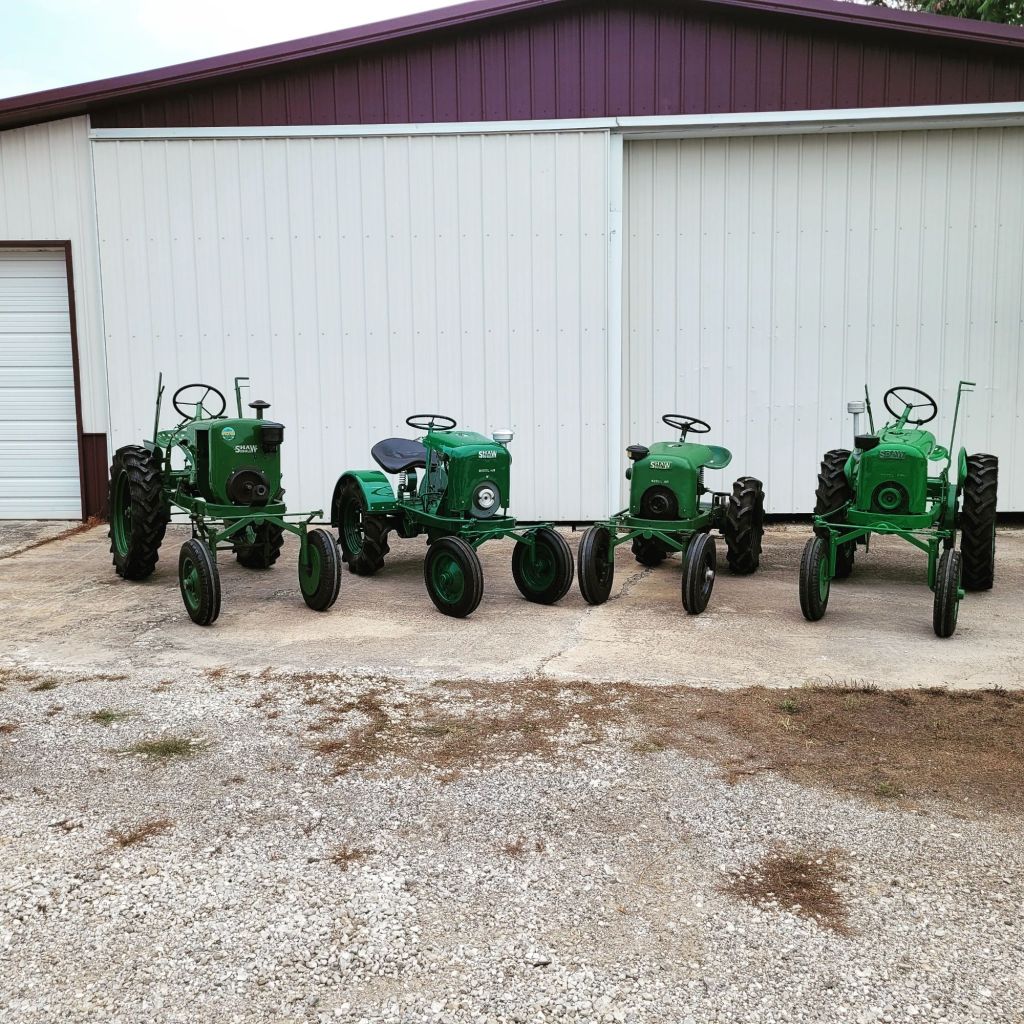
Welcome to my Shaw collection! Some of you may have discovered this page by following a URL link scanned during a display of these tractors at a show. Once you have read this information page, I invite you to check out more of my blog. Some of the individual tractor information will include article titles in which I share even more personal detail.
I don’t claim expertise in the Shaw Du-all brand.. However, I continue to do extensive research. I admit, with no shame, I’m still a student.
The history of Shaw Manufacturing and founder Stanley Wilbur Shaw dates back to the early 1900s. Mr. Shaw’s accomplishments include building his own engine, motorizing bicycles, and building cars. His first tractors were Ford Model T conversions. He started building walk behind tractors in the thirties, with the progression into building riding tractors. Most of his tractors were powered by Briggs & Stratton or Wisconsin engines. The horse power ranged from 5 to 12 hp. Shaw sold his business to Bush Hog in 1962. More can be read in my articles
Stanley Wilbur Shaw 100 Amazing Years.
Shaw Manufacturing Galesburg KS
Kansas Inavation
The Shaw tractors in my collection are later models. Shaw Manufacturing made it difficult to date a tractor by a specific production year. There are no serial numbers. Most Shaw tractors can be dated by the engine serial number….providing the tractor still has the original engine. Two of mine have been repowered.
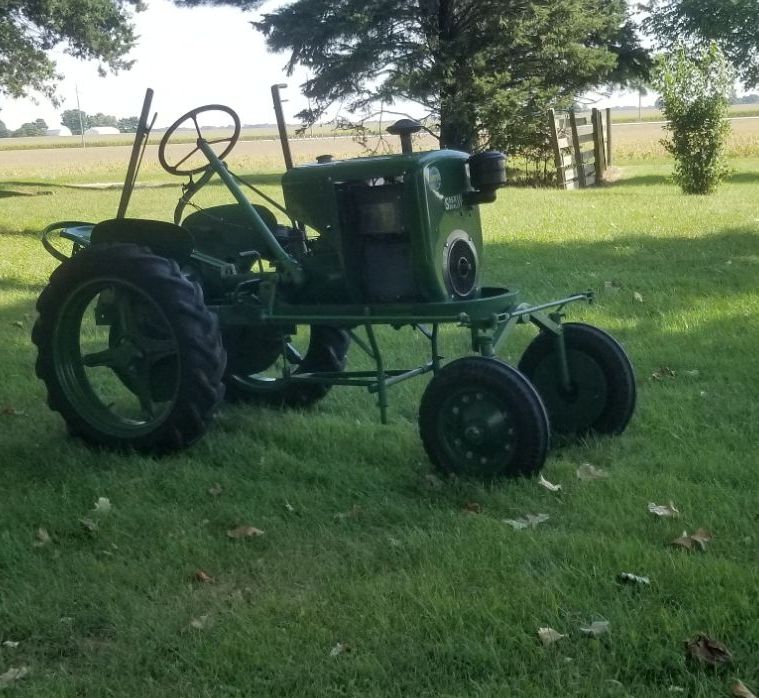
The model R12T was built in the late 40s and early fifties. The tractor was powered by a Wisconsin 12 horse twin cylinder. This model was a big brute, most Du-alls didn’t have this much power.
This one is equipped with a rear and midship lift. Most 12Ts have the rounded “hoop” front frame, but earlier models had a more boxy square front. The square frames are more rare. I only know of maybe two or three early square frame 12Ts still in existence.
The engine in this one was built in 1951, going by that, I’d assume the tractor was built then. The paint scheme probably isn’t correct for this model. The engine cowling were left gray coming from the Wisconsin factory.
More detail can be read in my article Modified
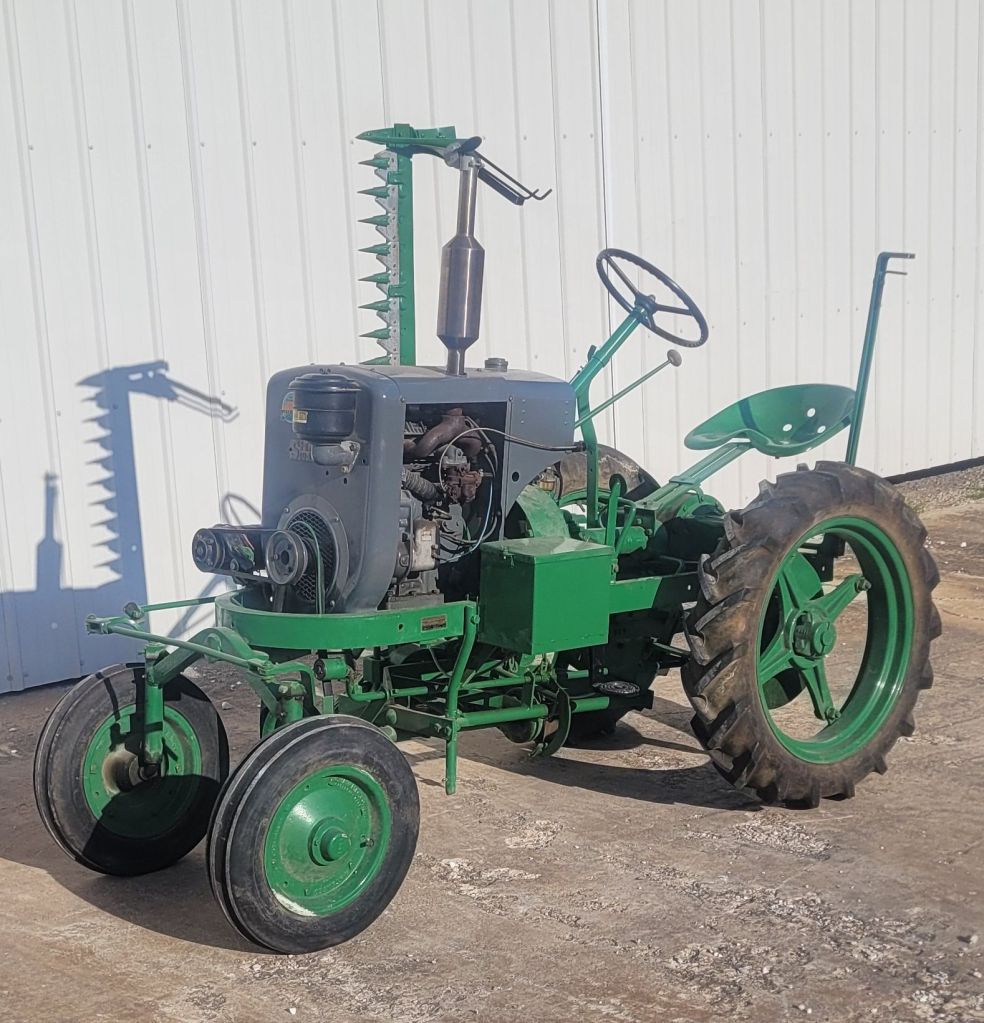
This 12T is painted correctly. The engine and cowling came from Wisconsin’s factory already painted grey. Shaw must have seen no need to paint the whole machine after assembly.
This tractor had a six volt positive ground electrical system and electric start. According to my research, the electric start came in two configurations. One style had a starter generator combined. The other type, such as in this case, has a separate starter mounted on the fly wheel. The electric system is similar to the Ford Model T.
This electrical system is “modernized.” I’m not a fan of 6 volt positive ground, so the generator has been updated with an alternator. A purist collector probably wouldn’t approve, but Stanley Shaw more than likely would. Shaw was innovative enough to improve his machines.
The flywheel starter was updated. The old one was beyond restoration. The old starter was quite unique. The bendex engaged the flywheel from the opposite side of the starter in a pulling motion.
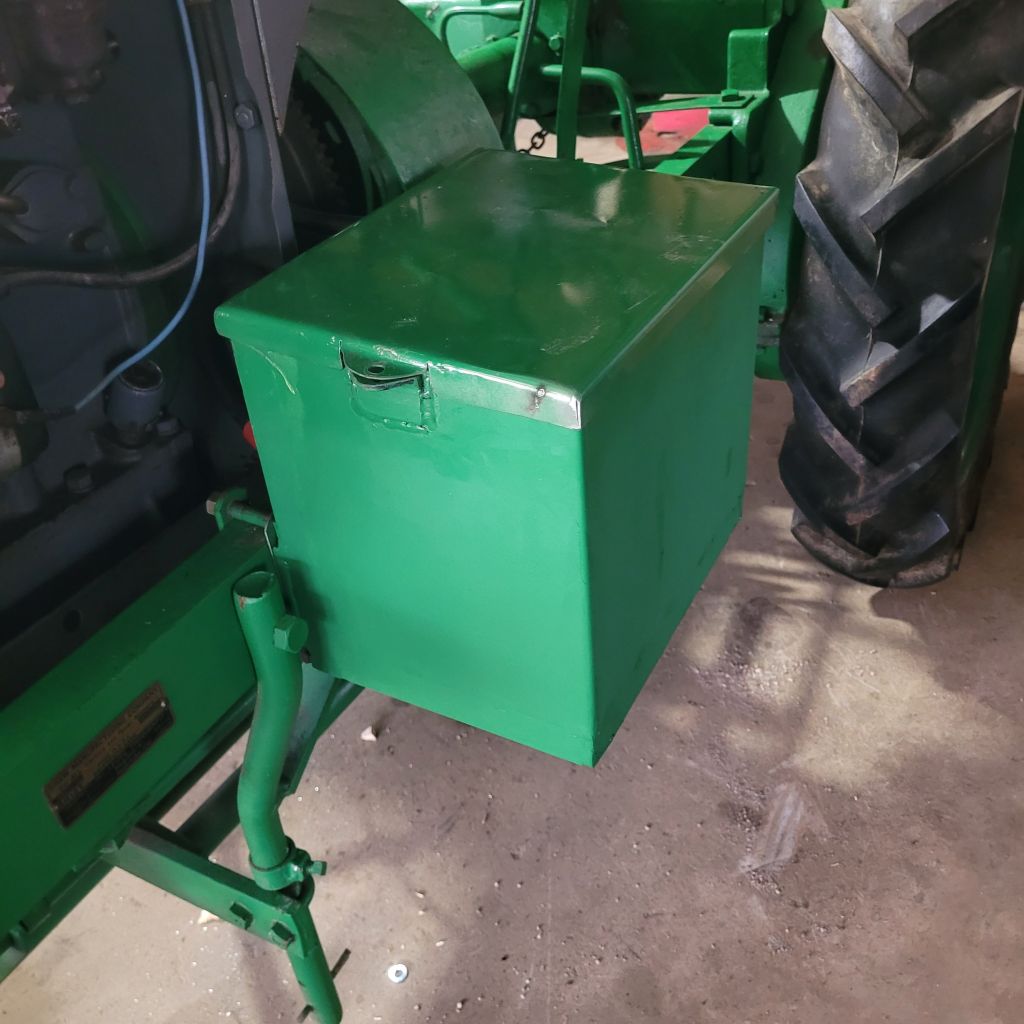
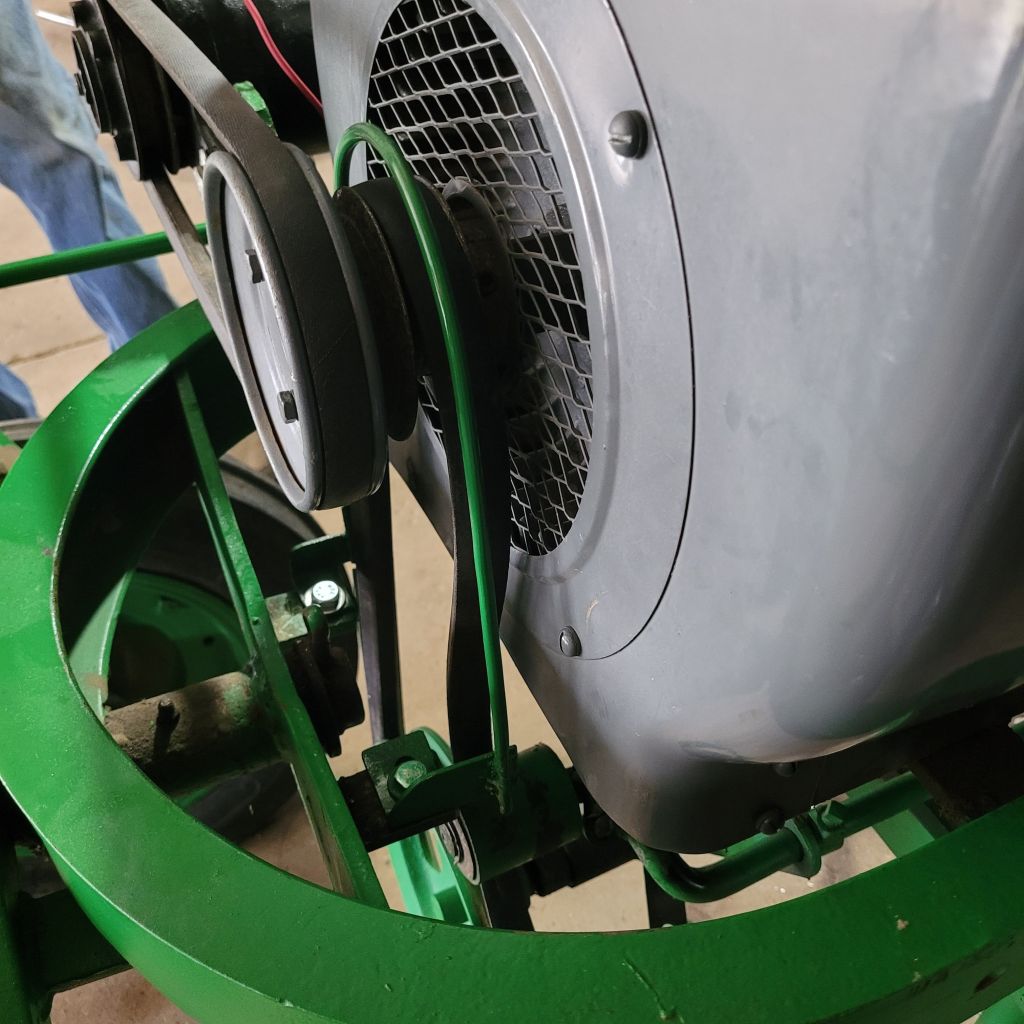
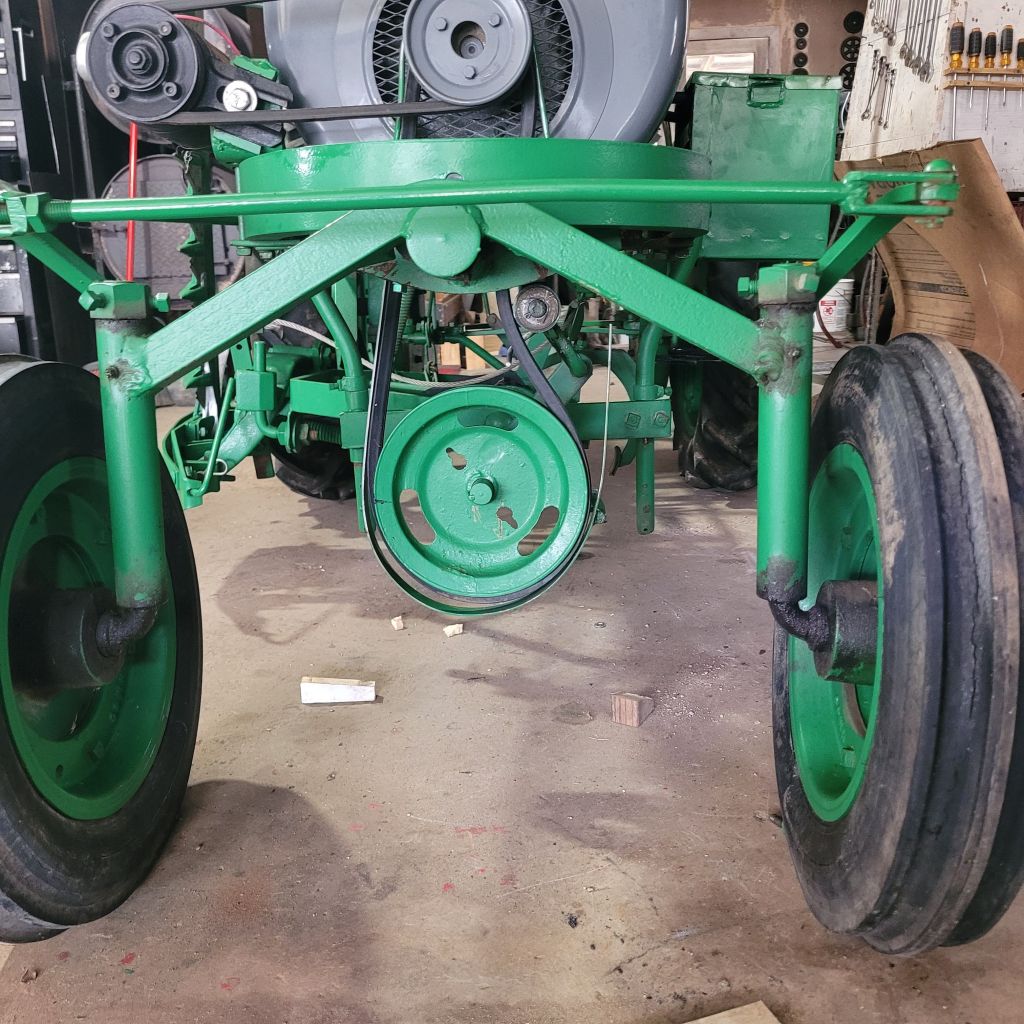
This 12T has a mounted sickle bar mower. The enclosed battery box is not factory. The PTO belt guard was also a later correction. Those were added features.
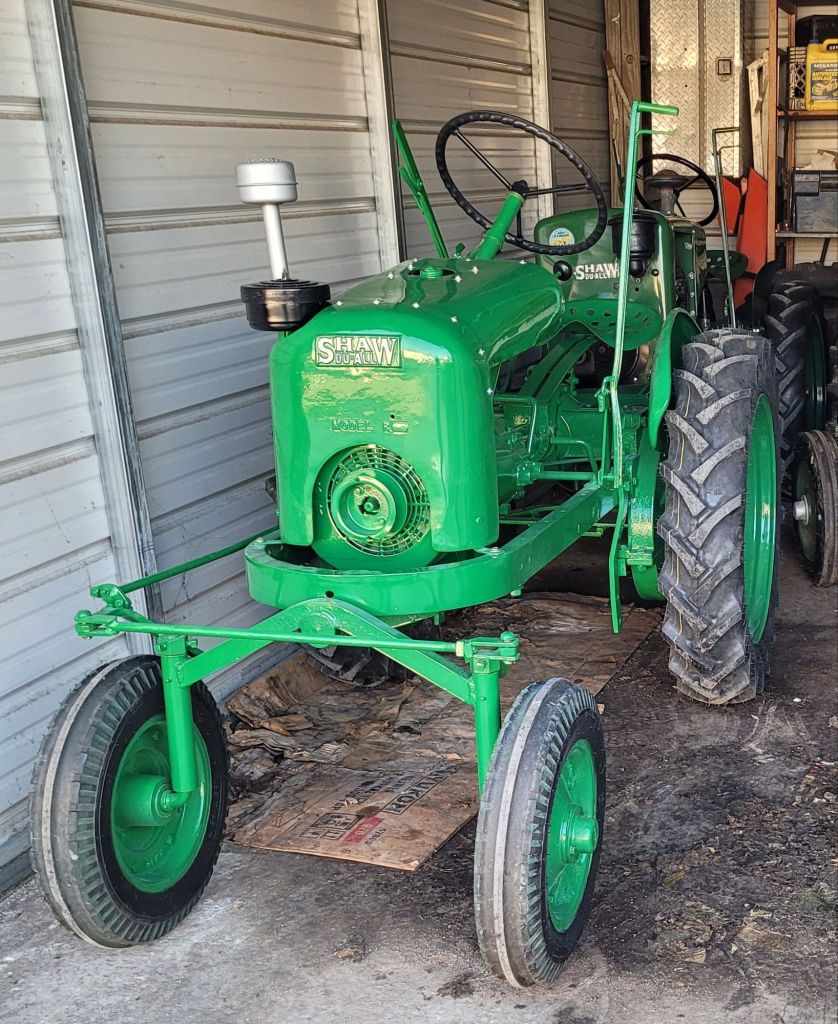
Shaw built the R models in the forties. They came in various horse power ranging from 5 to 9 A. 9HP is the most rare of the R models. A 9 is also more distinct having a boxy square frame. Some R models were also powered by a 8 horse Wisconsin. The Wisconsin engine placement was more forward in the frame.
This R tractor has been repowered with a 8 Horse B & S, which isn’t original. I acquired the tractor with an engine dating 1971, which obviously was changed since leaving the factory, since the factory closed in 1962.The new power is more vintage and the serial number is dated 1947.
I can not attest that this tractor left the factory as an 8 horse. The hood and grill came from a donor parts tractor. Not all Shaw tractors left the factory with a hood.
This tractor has a rear “hoop” lift and midship lift. Some non factory adds are fenders, a tool tray, and swinging draw bar.
Restoration pictures
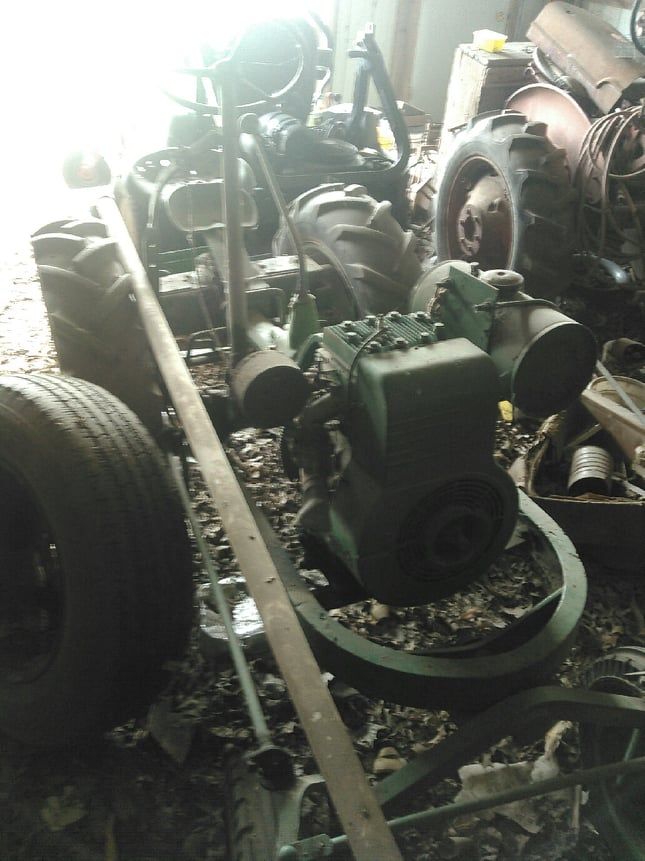
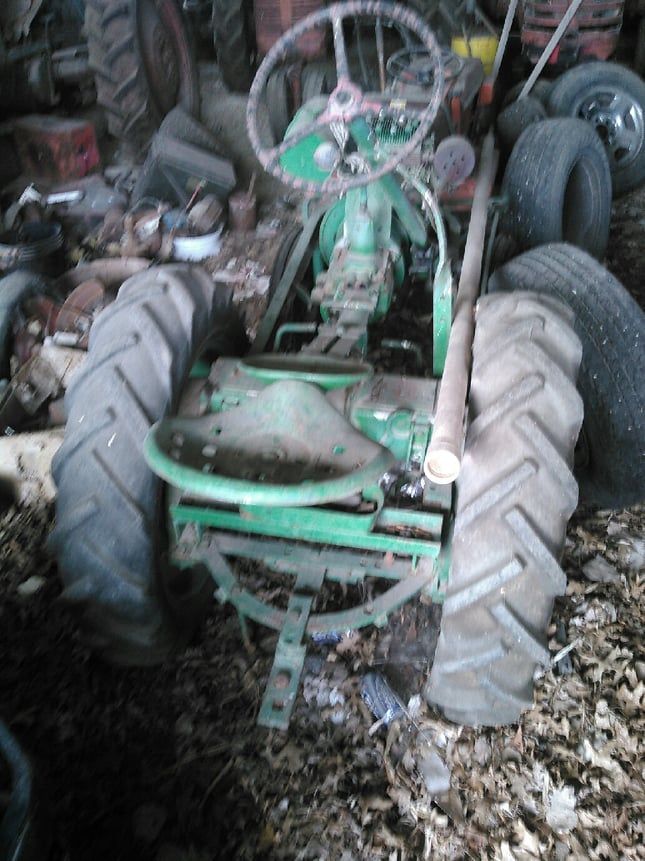
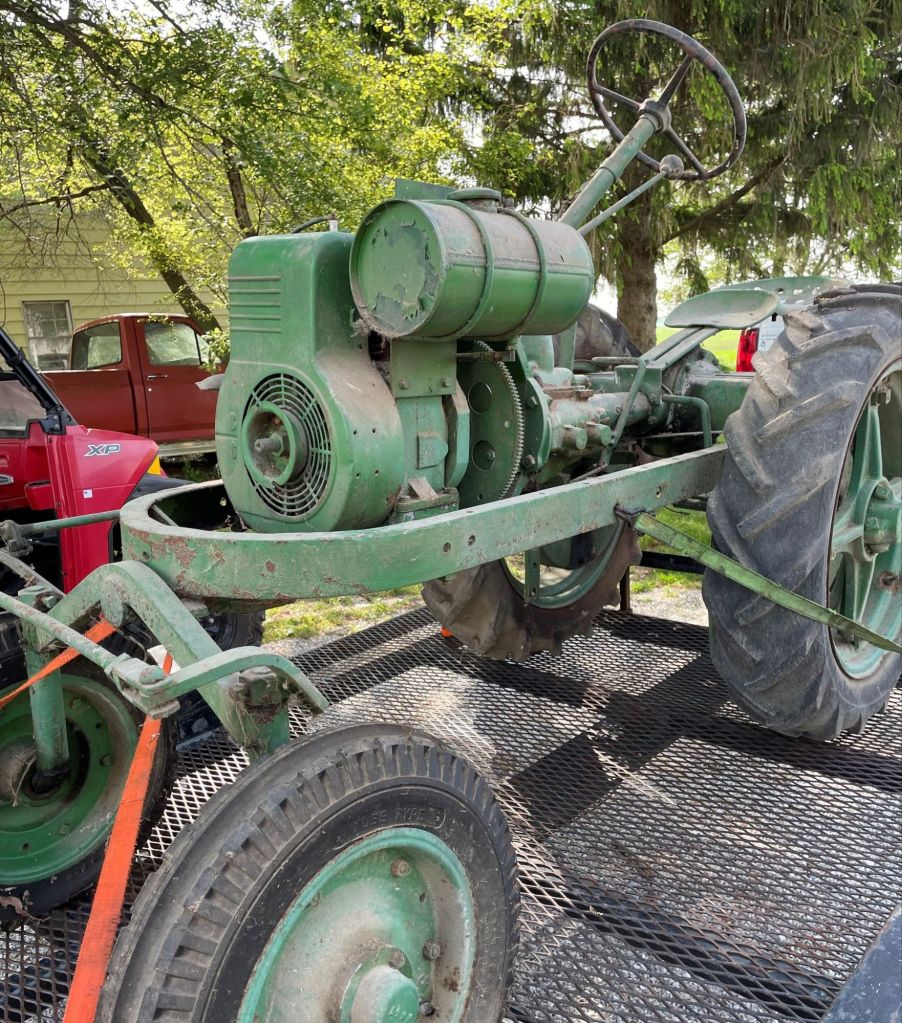
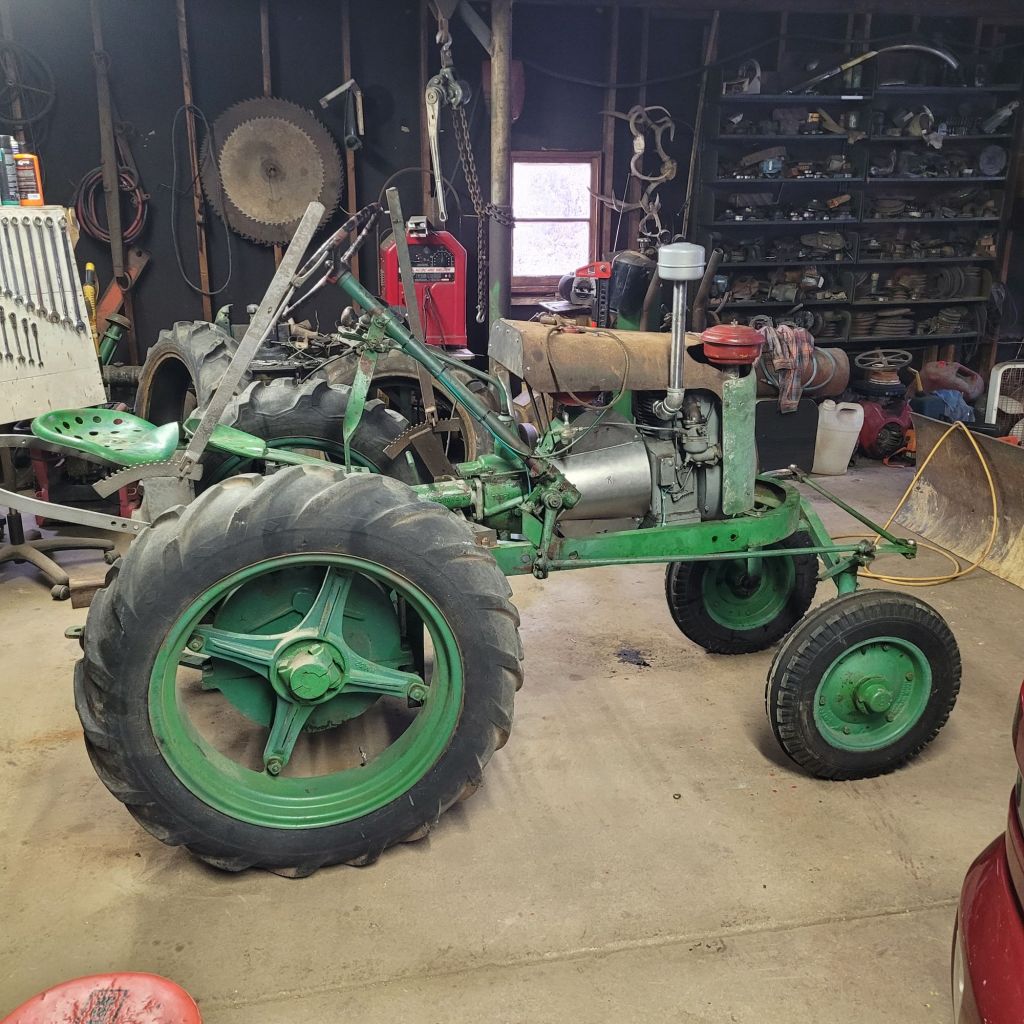
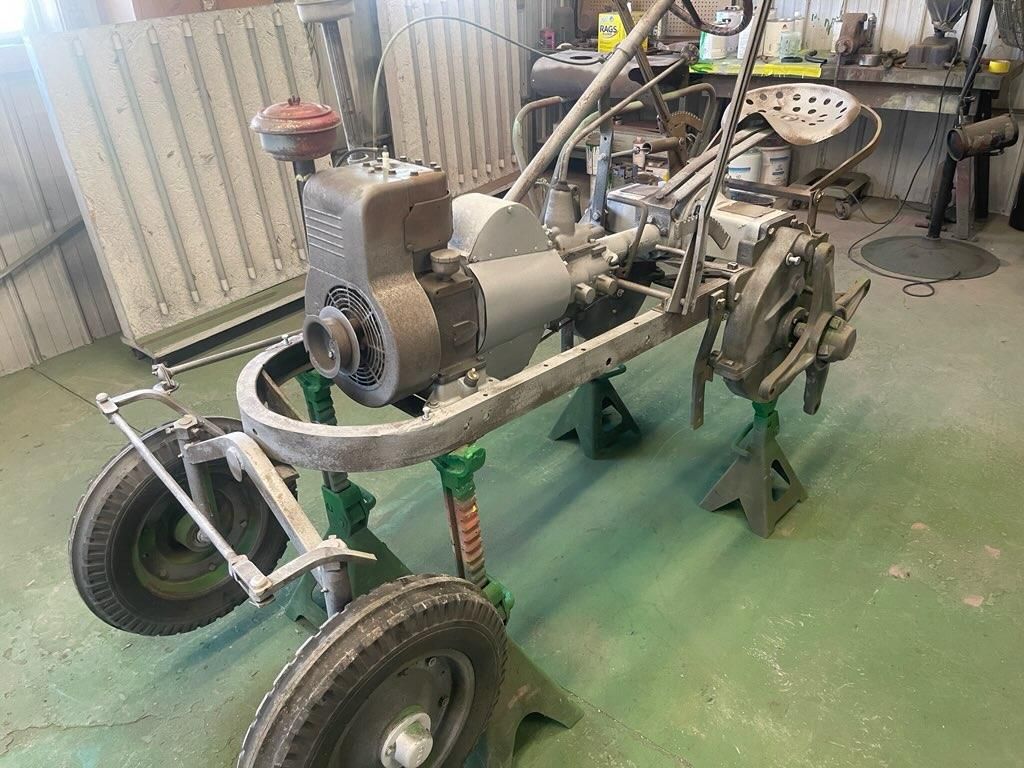
My R8 has seen a transformation. The restoration is well documented in my blog articles The R8 “Barn Find” and R8 “Barn Find” Revealed.
This partucular tractor has been featured in Lawn & Garden Tractor Magazine, in which it graced the cover
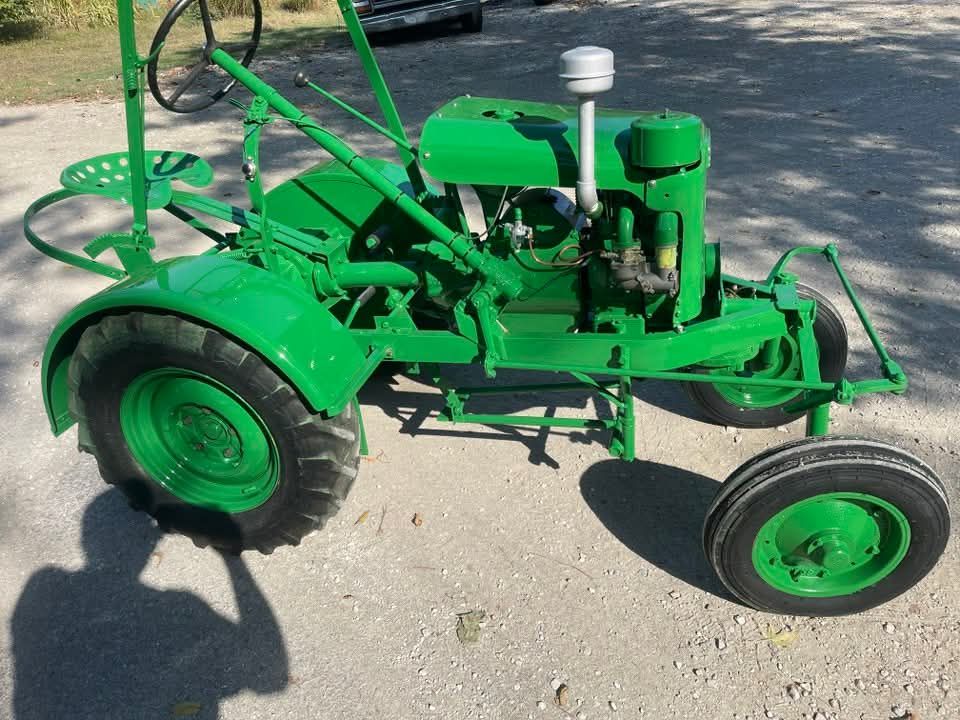
Shaw R models had a few variations. I haven’t found documents proving horse power, but the R6 was avaliable with either a rounded hoop frame or an A frame.
Claims are the A frame were prewar tractors, but I’d be inclined to believe it had more to do with when Shaw acquired a press. Maybe the factory gained a press after the war.
Earlier models had the A frame so its logical to think A frame R was the earliest model. As yet I haven’t determined what year Shaw gained a press.
The R6 came out riding on 16, 22, and 24 inch rear wheels. This one is on is a 16′ model, My parts donor has 24 inch wheels. I almost corrected the rear wheel size mistake before research discovered it wasn’t wrong.
This R6 has been repowered. The engine is a 16 horse B &S. When I acquired the tractor the grill had been cut to suit the engine fit. I’m fortunate to have a fabricator working on my tractors. He did a refit to make then engine fit to look more original.
This tractor is equipped with a factory midship and rear hoop lift. The prairie fenders aren’t original. Most Du-alls are open wheel without fenders.
More detail on the R6 can be read in my article Shaw Du-all R6+.
R6 restoration pictures

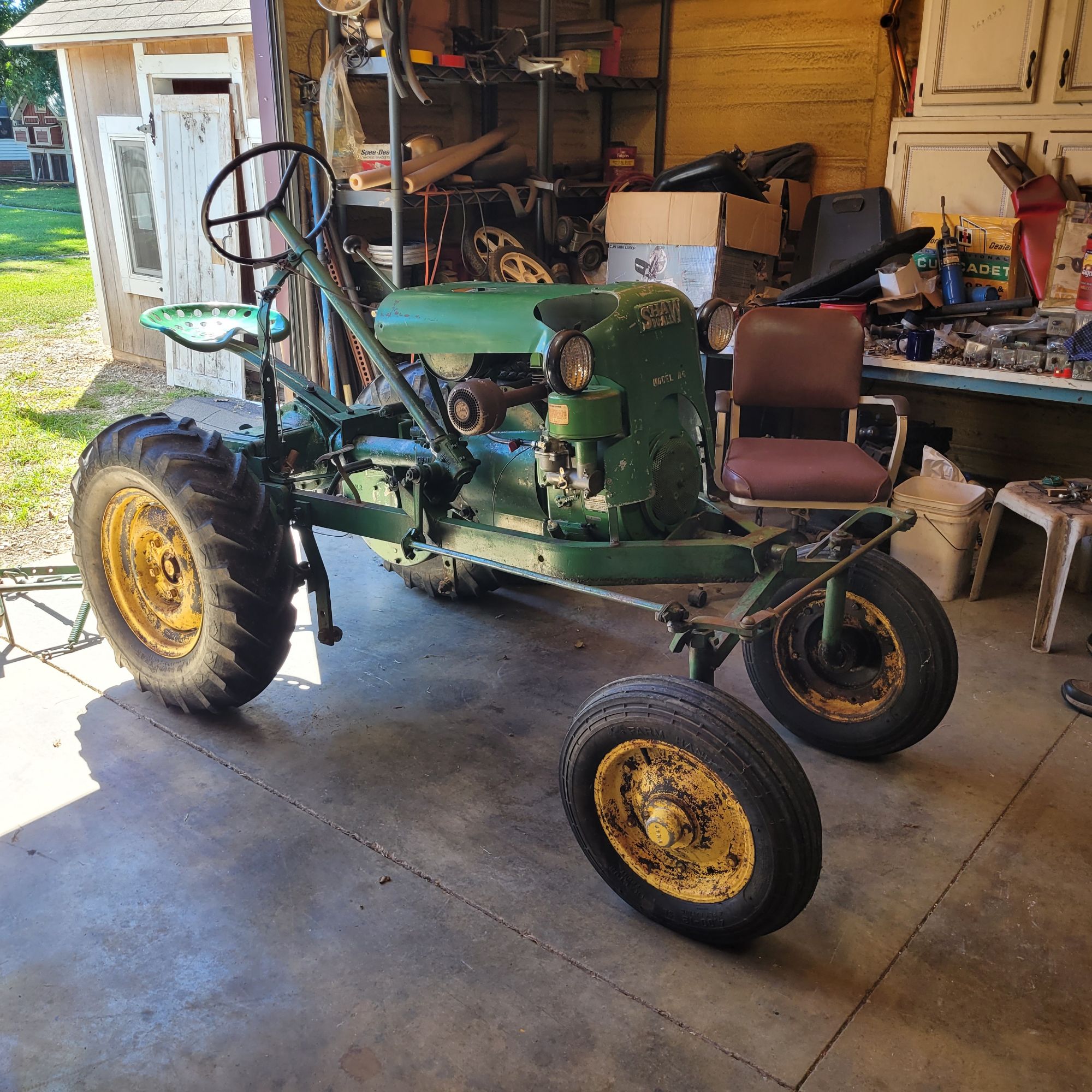
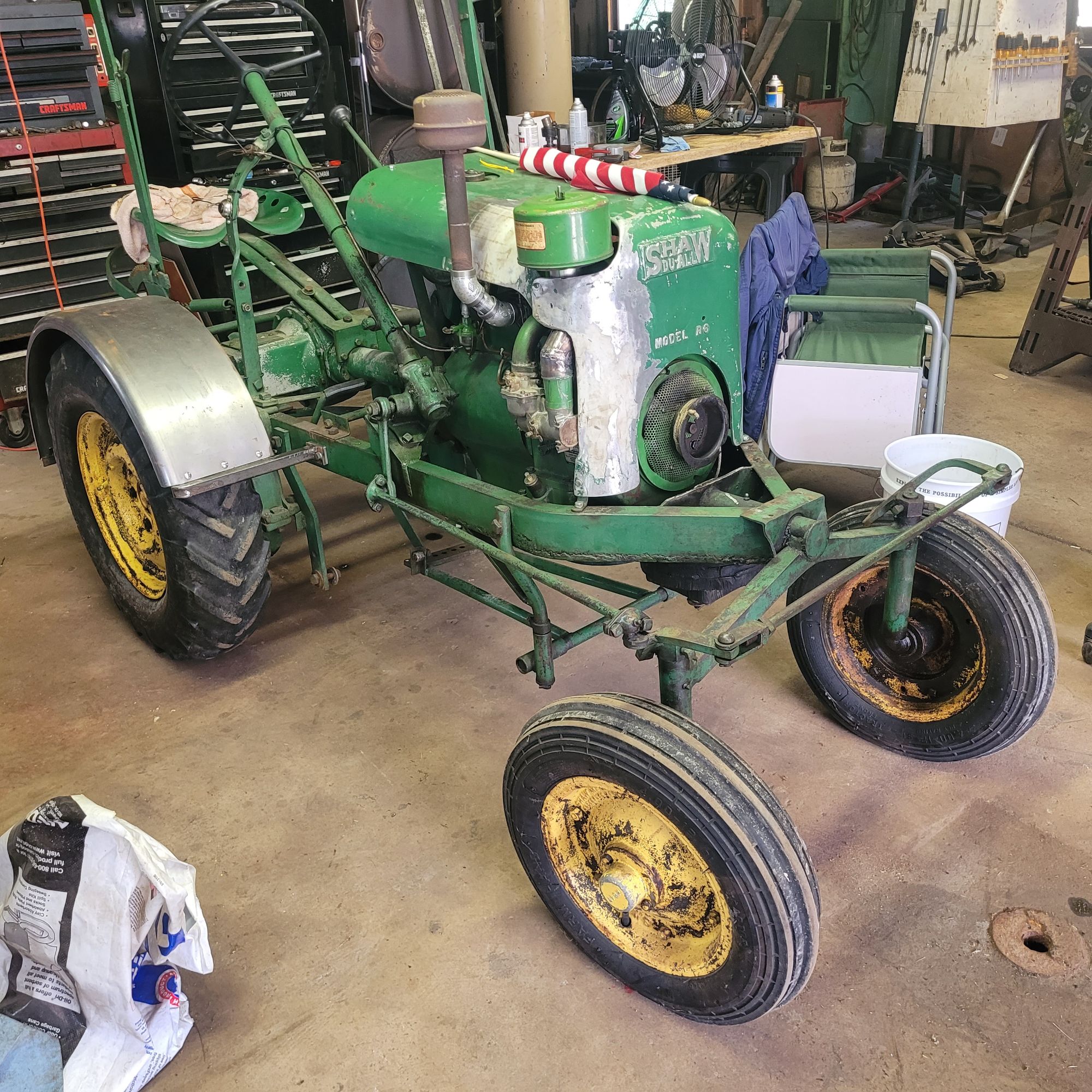
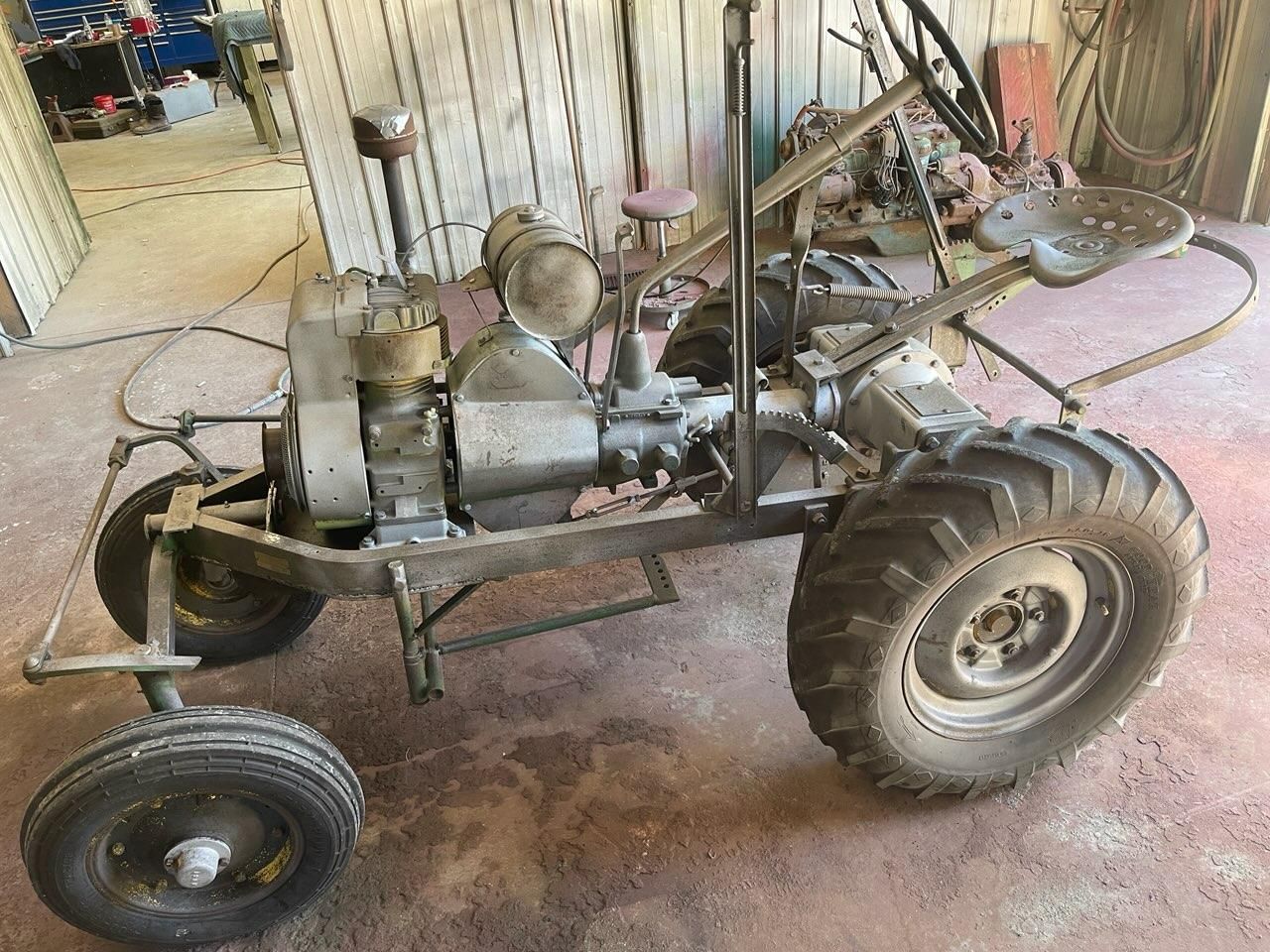
I’m still learning about the N series Du-all. I will continue to update this page as my knowledge increases, and I can support my findings with documented facts. The N series was the last tractor models Shaw produced. Three models left the factory. The N5, N8, and N8W. There is literature advertising an N2, but it’s doubtful that one ever left the factory. More than likely it was repowered with either a 5 or 8 horse engine. More can be read in my article Does it Exist?
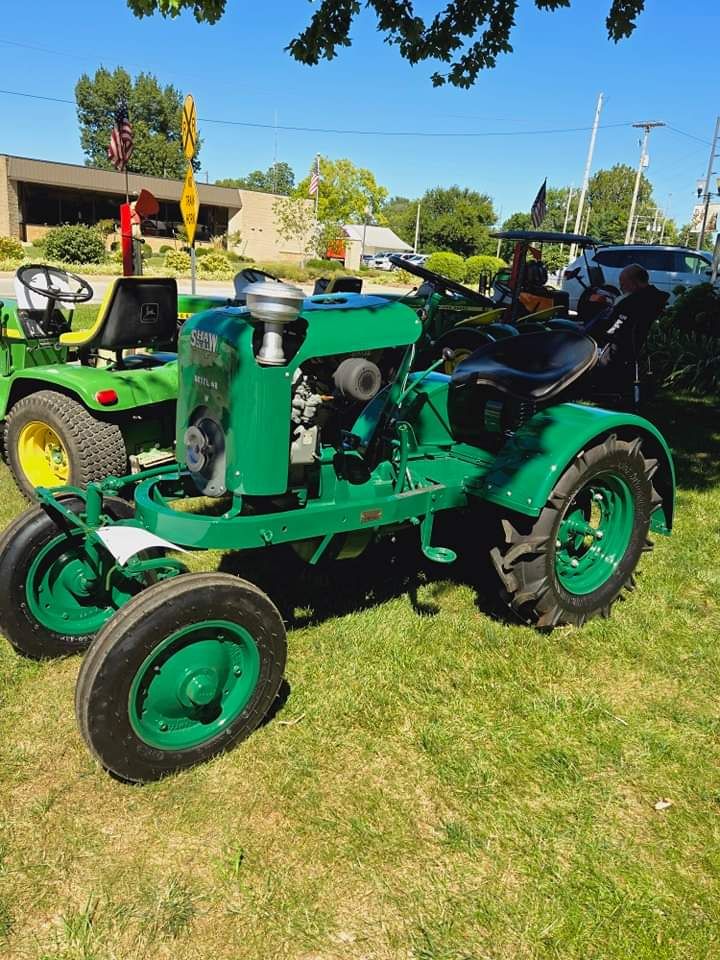
The Shaw Du-all N8W is powered with a 8 horse Wisconsin, supported with a three speed and rear axle from Ford parts Stanley Wilbur repurposed many Ford parts in his tractors. The N model were a complete reconfiguration from the R model. The tractor is shorter, more compact, and possibly more user friendly.
The model rode on 16 inch rear wheels. Brake linkage can either be rod or cable. This N8W has the cable style.
My 1956 N8W has been restored The rear wheels no longer bolt directly to the hub. This creates a more open appearance and establishes a safer wider foot print., It is equipped with a rear lift that has been updated with spring assist. The prairie fenders are added and not a factory option. My tractor sports a padded seat cover, which was elevated for operator comfort. a step was added to make operator access easier.
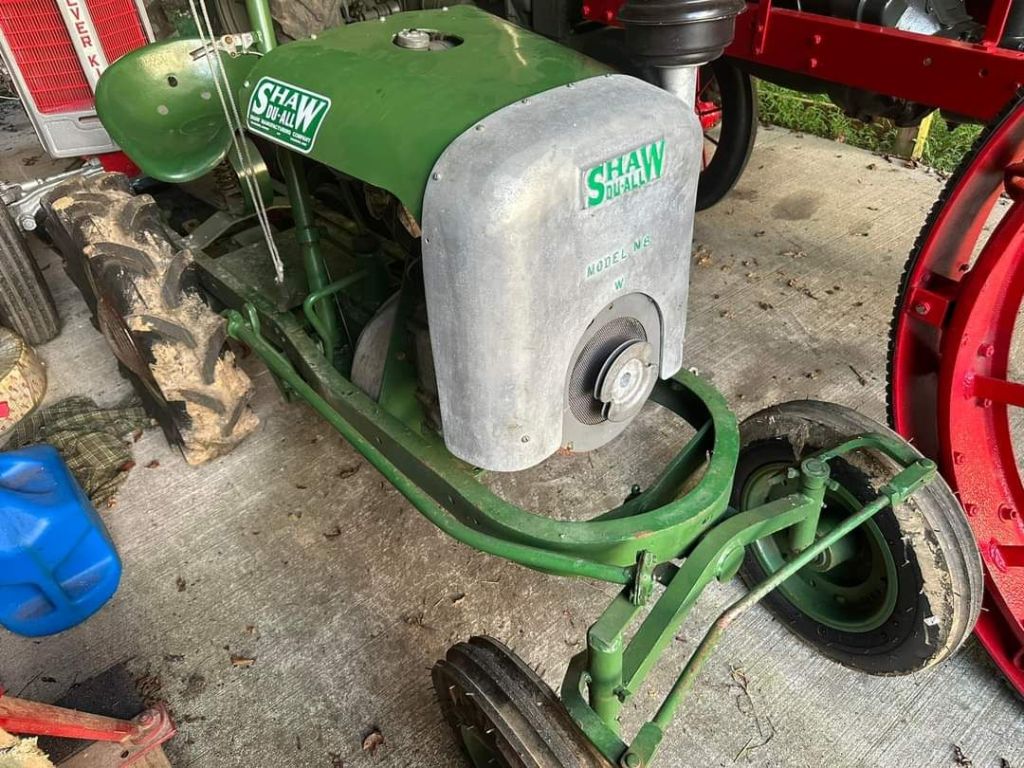
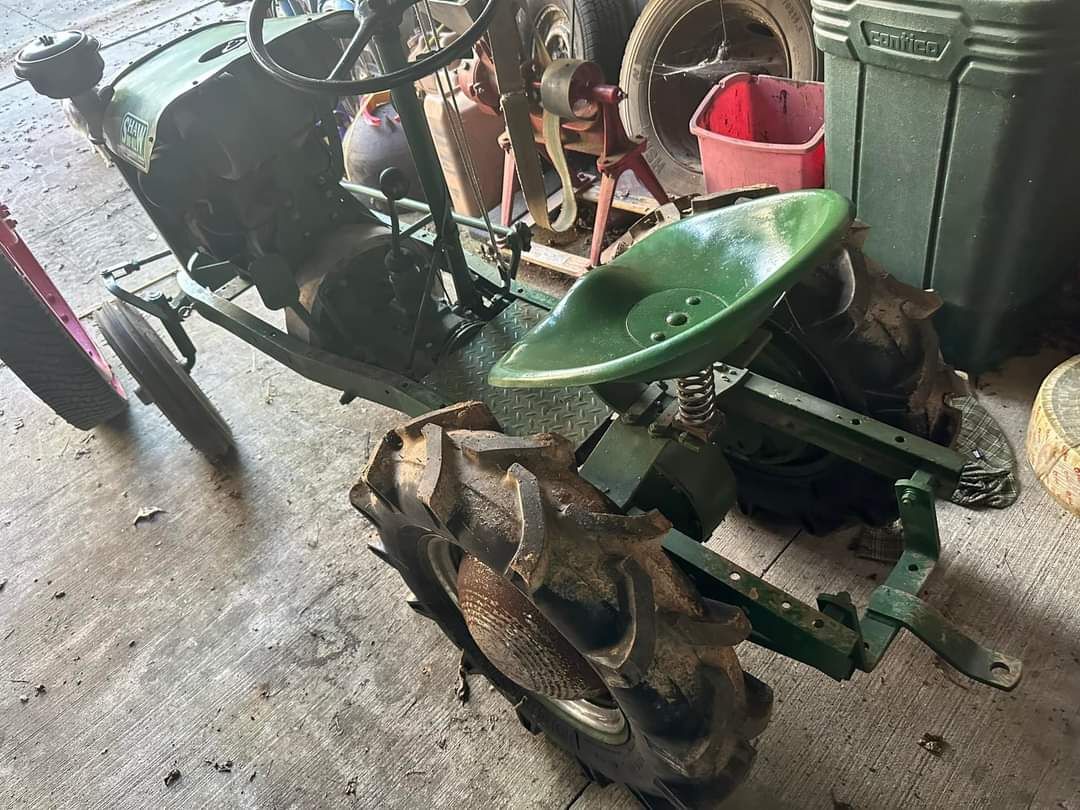
Surprisingly, I haven’t written much about this restoration. This tractor is mentioned with the N5, the R8 and my purchase of a donor parts tractor in the article The New Additions.
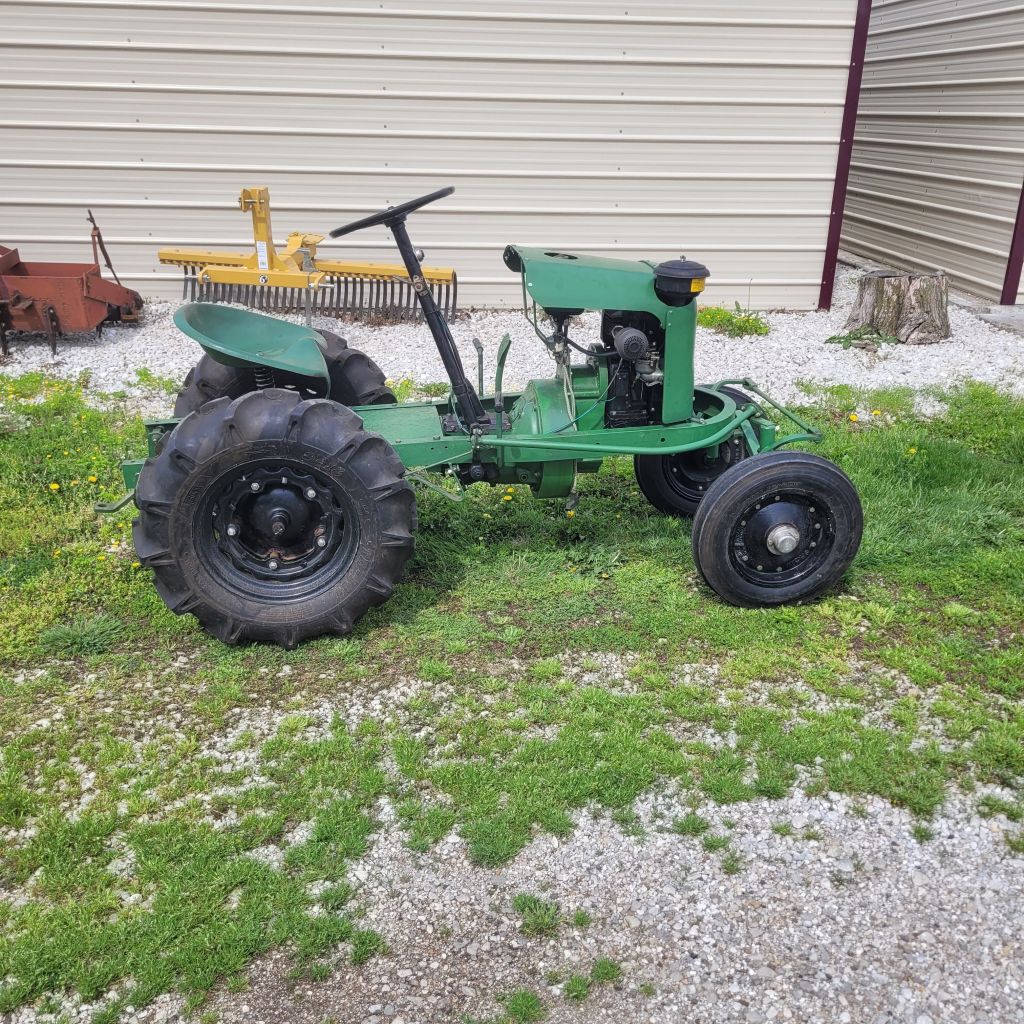
The Shaw N5 was powered with a B&S five horse 14FBC. It has a stout 3 speed transmission and ride on 16 inch rear wheels. This tractor has the rod style brake linkage, rather than cable.
My 1954 N5 has seen some repair, but no appearance changes. It my smallest and most basic tractor. The little tractor had an engine overhaul, and coil replacement. The rear wheels were modified with spacers creating an open wheel appearance and making the tractor’s footprint more stable. it also has a raised operator seat and step for easier access.
More can be read in my article Adjustments, The Back Story on My N5
I have a growing interest in the implements and attachments available for these tractors. So far my collection includes a moldboard plow, row cultivator rear tool bars that lift with the rear hoop lifts. and a lister. The R12T electric start sports a mounted sickle bar. All my implements are suited for the R model.
I have no pictures as yet with implements attached, other than the sickle bar mower.
Acknowledgements
Judy Snyder, Technical & research, Cindy Ladage, promotion sharing and support Keith Ladage, research support. Steve Farmer research and tractor mechanics Kevin Periman, metal supply Edwards Tractor Restoration painting
Special mention Jerry Rawlings, contracted fabricator. Every one of my Du-alls pass through his shop. Jerry is credited for the special non factory features
Don’t forget to follow and subscribe to the blog so you don’t miss any updates!
The Galesburg Historical Society has merchandise for sale at the following link. Stop by and Shop, it helps support the museum.

