
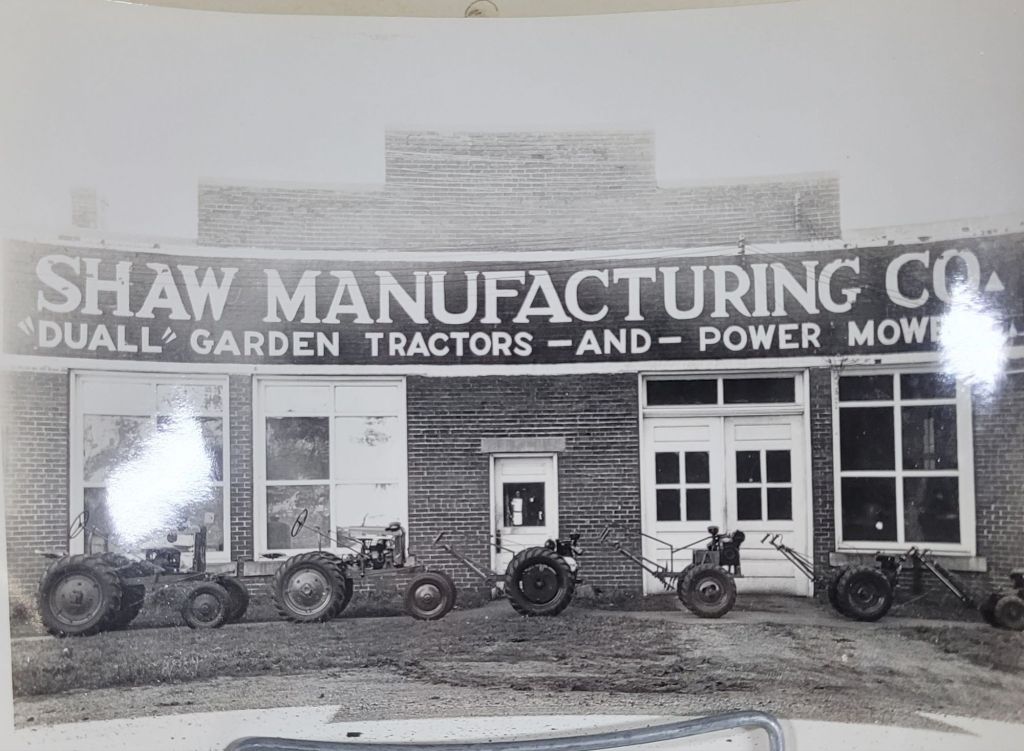
During research, I have discovered misconceptions and untruths about Shaw Du-all tractors. I’d like to address some with documentation, mainly consisting of archive pictures. I honestly admit no expertise. I’m only addressing statements that can be proven somewhat false.
This article will read argumentative, but on the same token, I hope to discuss a more accurate history.
There have been arguments as to when Shaw changed front frame designs, on his riding tractors. Early models had the basic boxy square front and typically a pointed A frame. Some argue that the A frame was an earlier “prewar” design. In a sense, that statement has merit.
Others argue that Shaw Manufacturing didn’t have a big enough press capacity to bend the hoop style frame until the later forties, after World War 2.
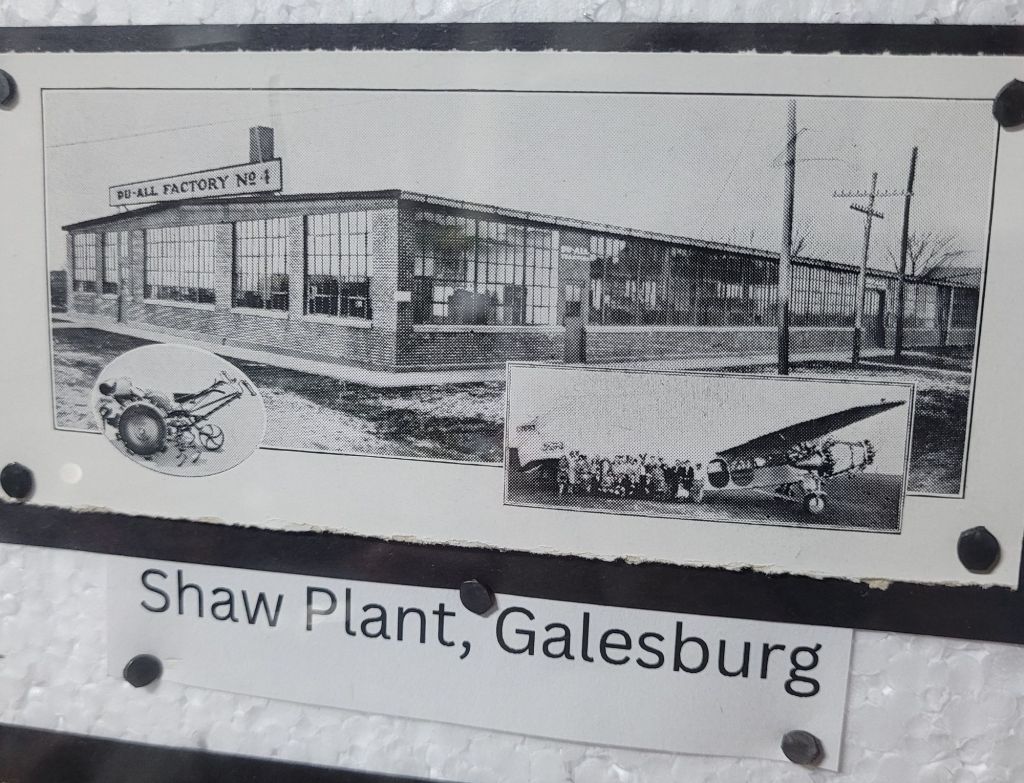
Stanley Shaw had growing pains in the late 20’s he was outgrowing the factory his father had built to detour Stanley’s move to Indiana. A larger factory was built south of the original “motorworks.” During this time, Stanley had acquired a 300 ton press. The press was placed, and the factory was built around it.
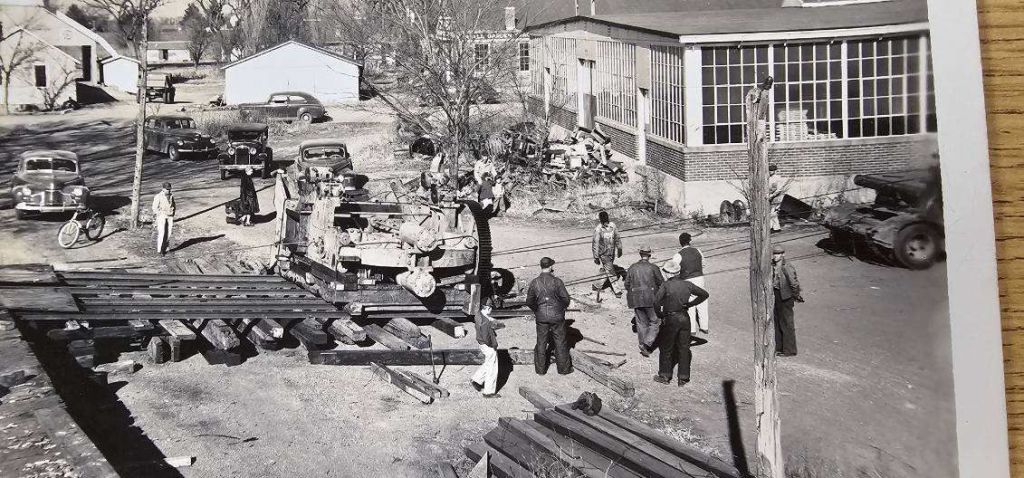
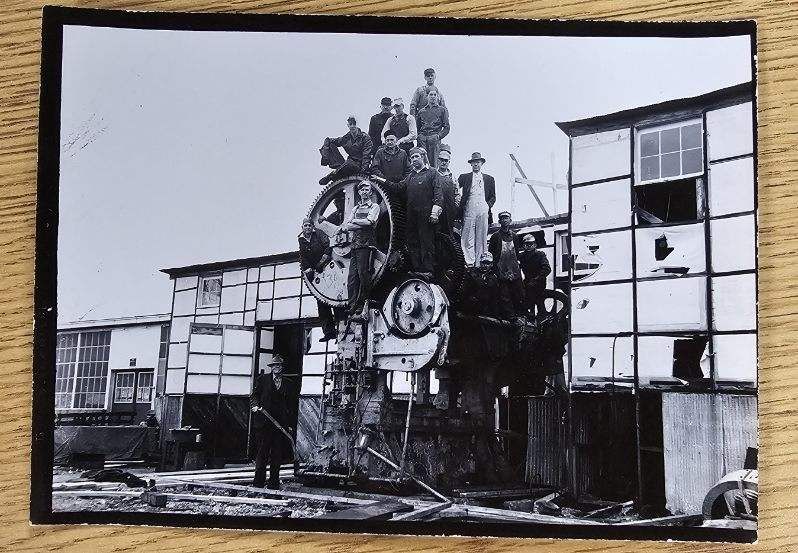
The press was purchased in 1932. Shaw had not even begun building his riding tractors yet. That would be about the time frame he built conversions and walk behinds. The A frames can be deemed prewar, but the press capacity had nothing to do with the hoop design.
Stanley Shaw was always reinventing and customizing his tractors, making them better. This is my working theory. It’s logical to assume that he created a hoop frame simply because it was a stronger, more efficient method to build. The hoop design required less welding to create, saving on labor expenses
An untruth I’d like to address is that Shaw Manufacturing did not ship tractors without grills and hoods. This was discussed in the Facebook group and has already been proven false. Many of Shaw’s early tractors and several R models had no sheet metal.
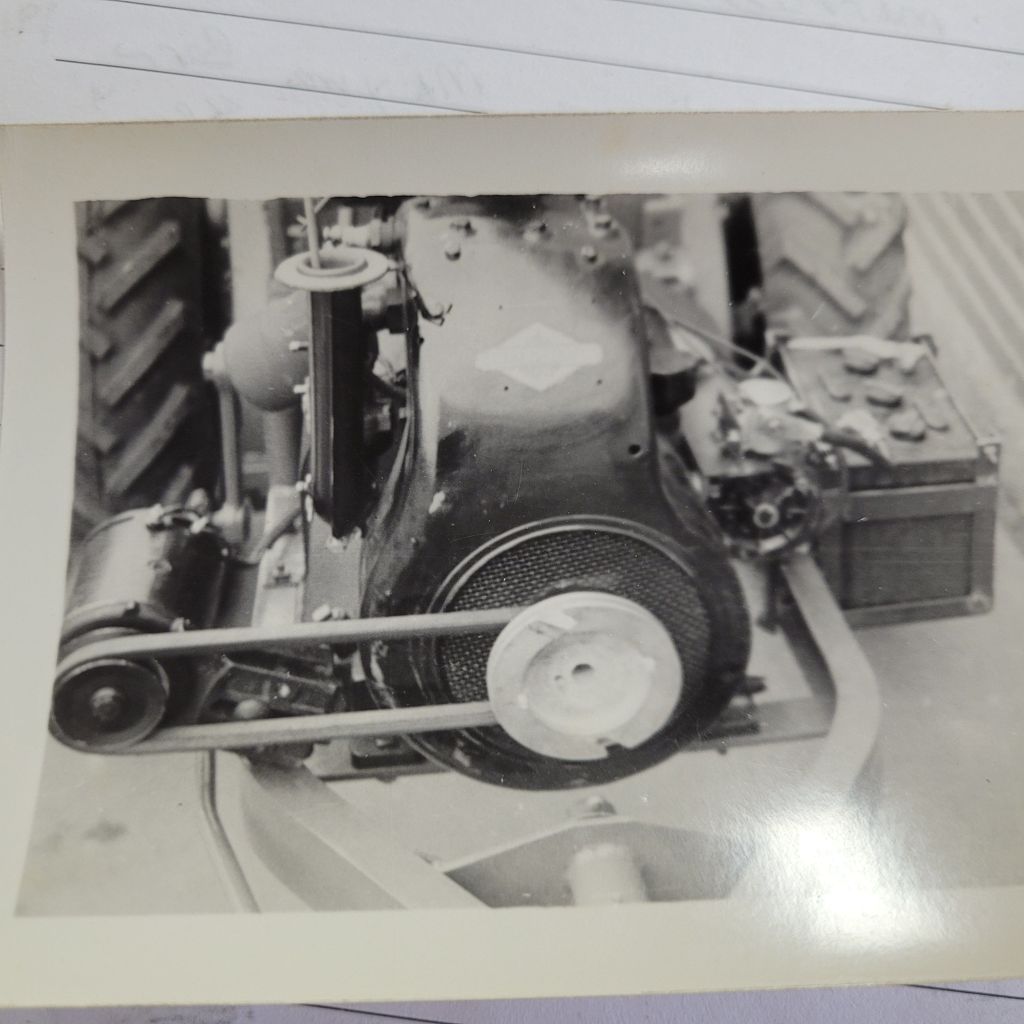
Someone told me that electric systems were never offered on Briggs & Straton powered tractors. Granted, Shaw was building a basic cost-effective machine, but electric and hydraulic systems were factory options.
Shaw powered mostly with Briggs & Straton, but he did use Wisconsin engines. The misconception shared with me was that Wisconsin power was the only engine that had electric start. Economic aside, Shaw built to the customer specifications.
I will share pictures I viewed during my research trip to Galesburg, KS. Some will prove multiple points to clarify my reasoning.
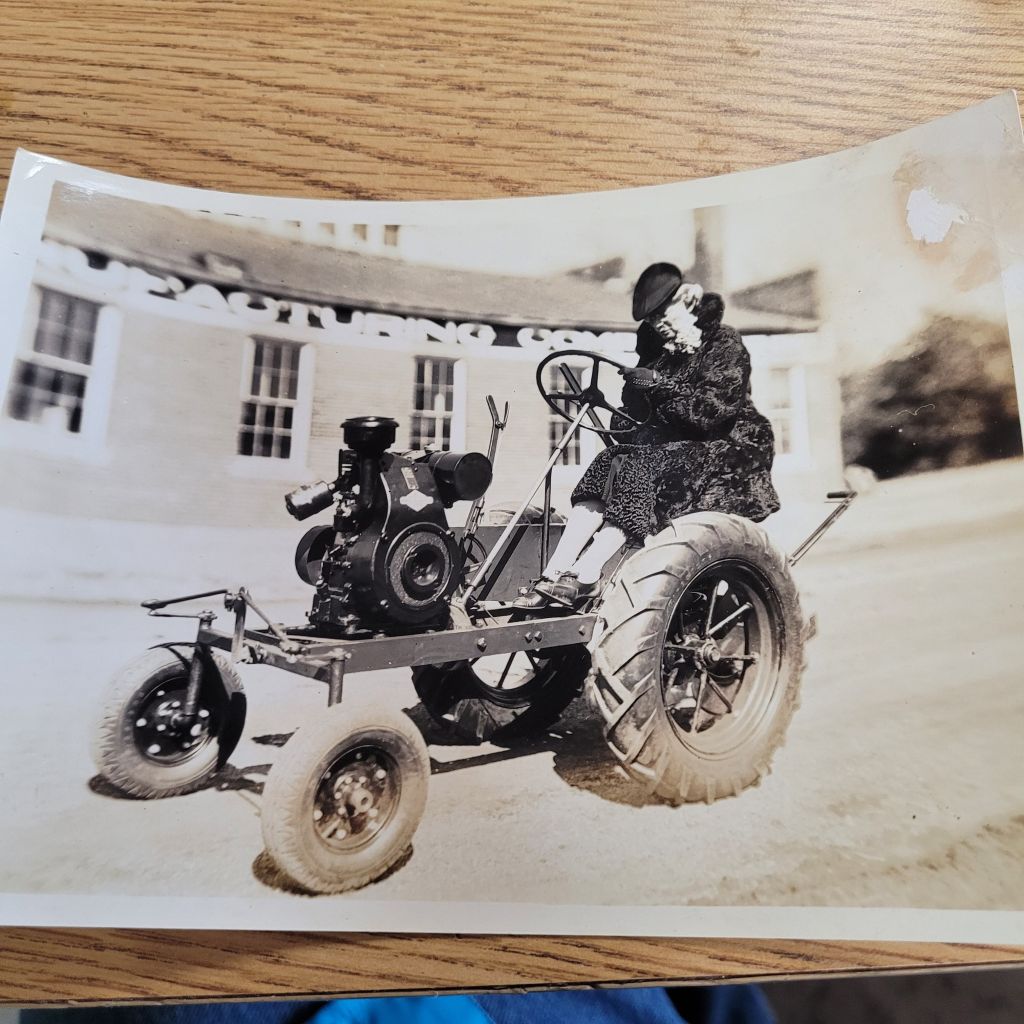
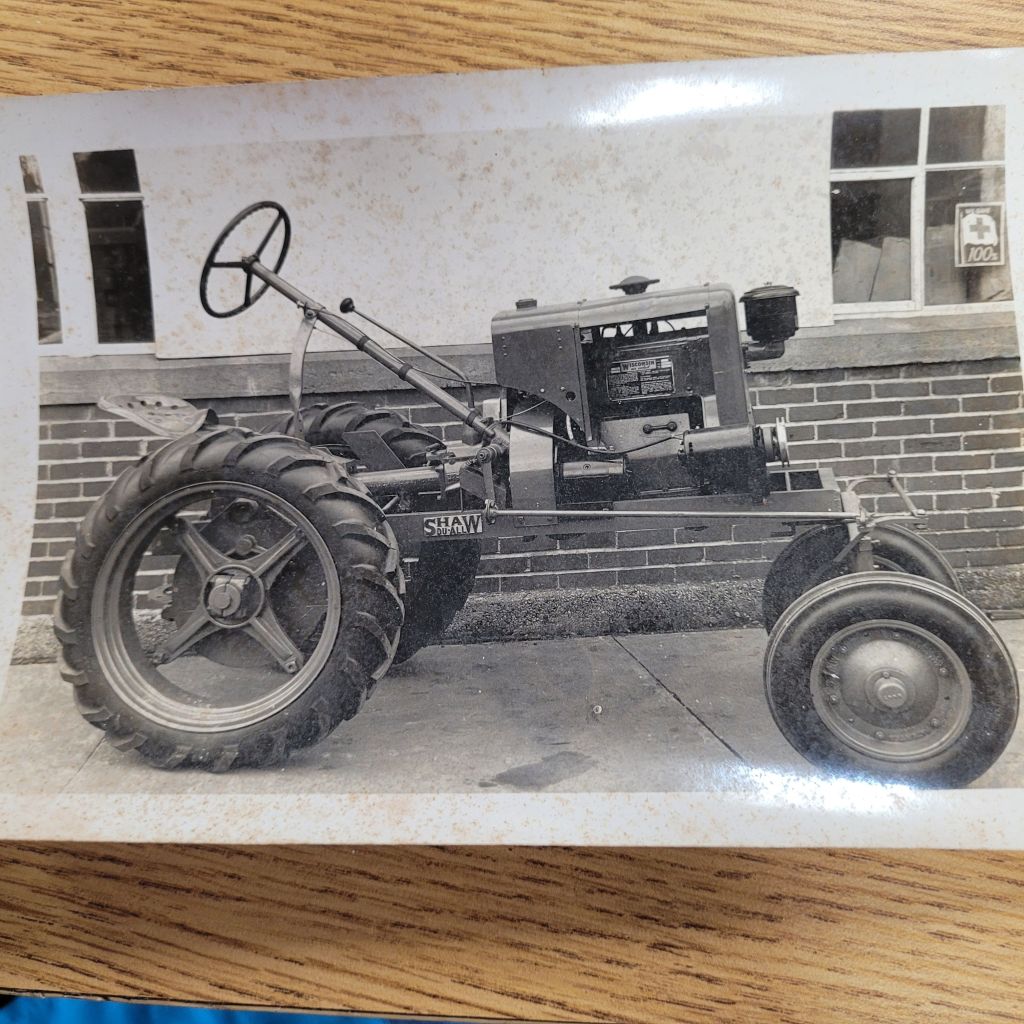
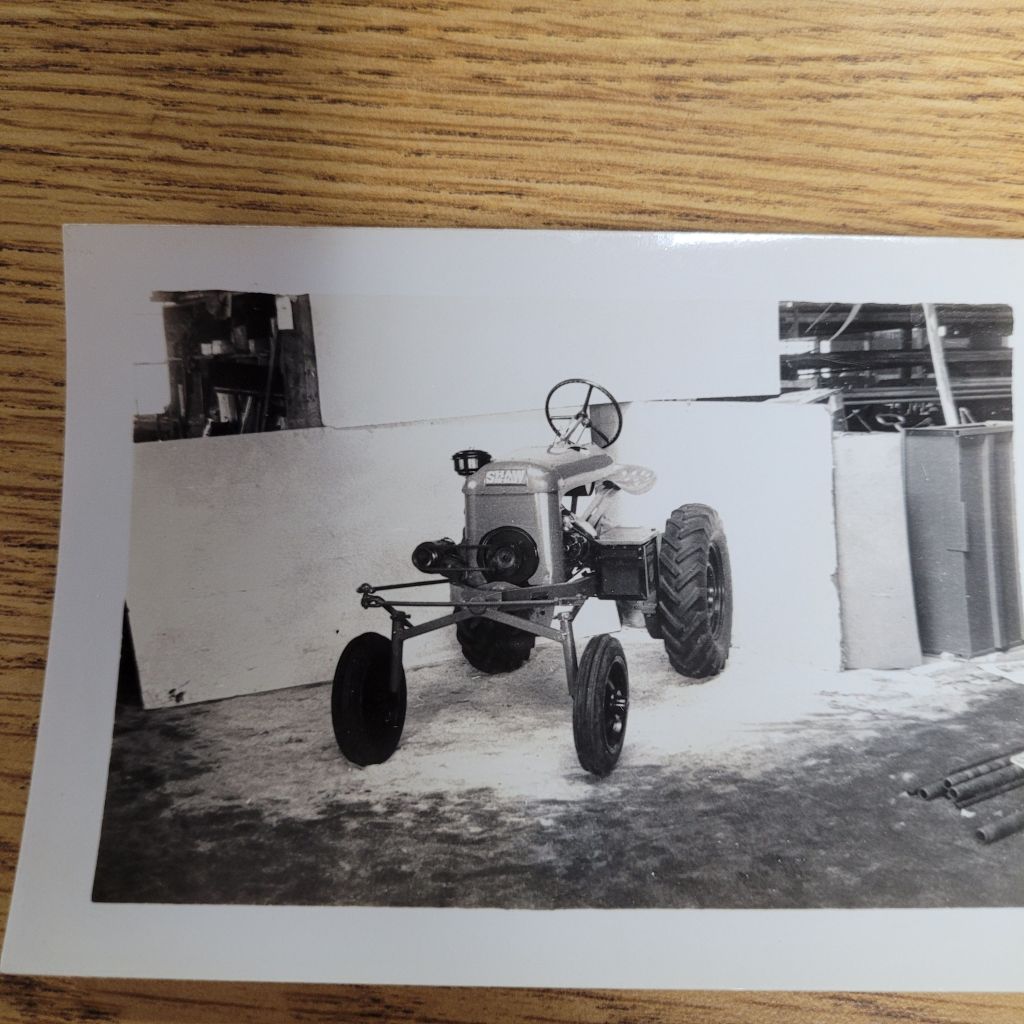
Hopefully, my essay will help clear some misconceptions related to Shaw Du-all tractors. Maybe, if anything, it will create a discussion of a more accurate narrative. I invite comments. It’s sad that some records were lost to history.
Editor’s note ~ I wish to thank the Galesburg Historical Society for their help. Thank you for allowing me to research pictures that I shared for this article.

 Antique Iron Media